
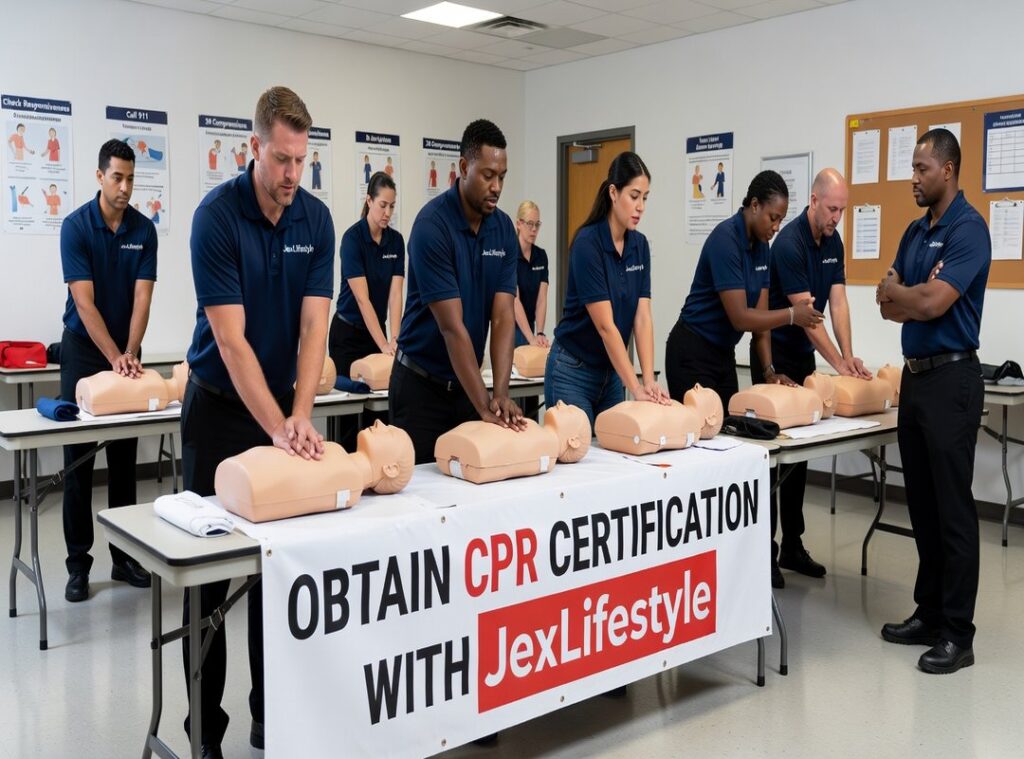
I failed my first CPR test. Not because I didn’t care. Not because I didn’t practice.
Because no one told me what actually mattered.
You’re nervous. You’re thinking: What if I freeze? What if I forget compressions?
What if the mannequin judges me? Yeah, it’s weirdly stressful. And yeah, it is key.
Because someone’s life could depend on you doing this right.
This isn’t theory. I’ve taught CPR. I’ve watched people panic.
I’ve seen instructors skip the stuff that trips you up. So I cut the noise.
How to Pass a Cpr Certification Jexplifestyle means knowing which steps get graded (and) which ones don’t.
It means practicing the rhythm, not memorizing jargon.
It means walking into that room calm, not confused.
You don’t need perfection. You need clarity. You need the real shortcuts (not) the textbook fluff.
This guide gives you exactly that. No hype. No filler.
Just what works. And how to pass.
What CPR Certification Actually Gets You
CPR is hands-on help when someone’s heart stops. You push hard and fast on their chest to move blood, and you give breaths to keep oxygen flowing.
You need different training for adults, kids, or babies. Healthcare workers take BLS. Teachers or coaches often pick First Aid/CPR/AED together.
You choose based on who you’re likely to help (and) what your job or volunteer role demands.
Workplaces require it. Schools ask for it. And yeah.
Your neighbor might collapse while walking their dog. You won’t know until it happens.
In-person classes let you practice on manikins with real-time feedback. Online-only? You watch videos and pass a quiz.
But you can’t learn chest compressions from a screen. (Ask anyone who tried.)
How to Pass a Cpr Certification Jexplifestyle starts with picking the right course. Not the fastest one. Jexplifestyle breaks down what’s legit versus what’s just paperwork.
Certification isn’t about a card in your wallet. It’s about doing something when seconds count.
And no (you) don’t need to be a hero. Just willing.
Prep Like You Mean It
I signed up for a CPR class last year.
It sucked because I showed up cold.
You want to pass? Start here. Register with the American Heart Association or American Red Cross.
Skip the random YouTube-certified guy in his garage. (Yes, that’s a real thing.)
Check reviews. Not just star ratings (read) the actual comments. People complain about bad instructors, outdated manikins, rushed testing.
Brush up on basics before day one. Watch a 10-minute CPR video. Read a one-page guide.
You’ll spot red flags fast.
Don’t try to memorize everything. Just get your hands and brain loosely synced.
Sleep. Eat. Seriously.
If you’re hungover or running on coffee and regret, you’ll zone out during compressions practice. And yes (you) will do compressions on a manikin. On the floor.
For real.
Wear clothes you can move in. No dress pants. No heels.
No stiff collars. Think gym clothes, not job interview.
Show up early. Not five minutes early. Ten.
You’ll need time to check in, grab supplies, and settle in. No one passes by half-showing up.
That’s how to pass a Cpr Certification Jexplifestyle. Not magic. Just prep.
During Class: Do This, Not That

I watch people zone out during CPR class. They stare at the clock. I get it.
But your brain needs to stay awake.
Take notes. Not essays. Just the big stuff.
Like 30 compressions to 2 breaths. Write that down. Not “30:2”.
Write “thirty compressions, two breaths.” Your future self will thank you.
Ask questions immediately. Not later. Not after class.
Now. Instructors expect them. They want you to get it right.
Hands-on practice isn’t optional. It’s the whole point. Press hard enough on the mannequin to make its chest sink two inches.
If your arms shake? Good. That means you’re doing it right.
“Look, listen, feel”. That’s how you check for breathing. Do it slowly.
Out loud. Even if you feel silly. (You’ll do it in real life.
So practice like it matters.)
“Head tilt, chin lift” opens the airway. Try it on yourself in the mirror later. It feels weird at first.
That’s normal.
Talk through each step as you do it. Say “compressions done, now breaths” while you move. Your mouth remembers faster than your hands.
AED training is simple. Plug in. Follow voice prompts.
No guessing. No memorizing codes. Just press where it tells you.
Want deeper tips? learn more in this guide. It covers exactly how to Pass a Cpr Certification Jexplifestyle (no) fluff, no filler. Just what works.
Don’t wait until the test to panic. Practice now. Ask now.
Move now.
Written and Practical Tests: What Actually Happens
The written exam is multiple choice.
It asks about concepts, steps, and real-life scenarios.
I read every question twice.
You should too.
Eliminate the dumb answers first.
Then pick the one that feels right (not) the one you overthink.
The practical test? You do CPR on a mannequin. Sometimes there’s a fake emergency setup.
Lights dimmed. Someone yelling in the background. (It’s not theater.
It’s stress testing.)
Stay calm. Breathe. Say your steps out loud.
Airway, Breathing, Circulation (as) you go.
Instructors watch for competence, not perfection. They’ll nudge you if you miss a step. They want you to pass.
Not fail slowly.
You’re not being graded on speed or flair.
You’re being graded on whether you’d keep someone alive long enough for help to arrive.
That’s it.
No tricks. No gotchas. Just clear thinking and steady hands.
If you trained honestly, you’re ready.
Worried about the details? I get it. But don’t let nerves rewrite what you already know.
For more straight talk on prep and mindset, check out the How to Pass a Cpr Certification Jexplifestyle guide at Jexplifestyle Health Advice From Jerseyexpress.
You’re Ready to Start
I failed my first CPR test. Not because I didn’t care. Because I waited until the night before to practice.
You feel that knot in your stomach too. The one that says *What if I freeze? What if I forget the steps?
What if someone’s life depends on me and I blow it?*
That fear is real. It’s also beatable.
How to Pass a Cpr Certification Jexplifestyle isn’t about memorizing jargon. It’s about doing the work. Hands-on, step-by-step, again and again.
Until your body knows what to do before your brain catches up.
You don’t need perfection.
You need readiness.
And readiness comes from practice (not) once, but often. Even after you pass, grab a friend and run through compressions every few months. Keep your hands sharp.
Keep your confidence real.
Because when it matters most, you won’t have time to think.
You’ll just act.
That moment (the) one where someone stops breathing and you step in (that’s) why this matters. Not for the card. For the person on the floor.
Sign up for your CPR course today and help yourself to be a lifesaver!
 Fashion Trends Editor